
Yala National Park Safari: Tips for Spotting the Elusive Leopard
Jan 30, 2025 • 10 min read
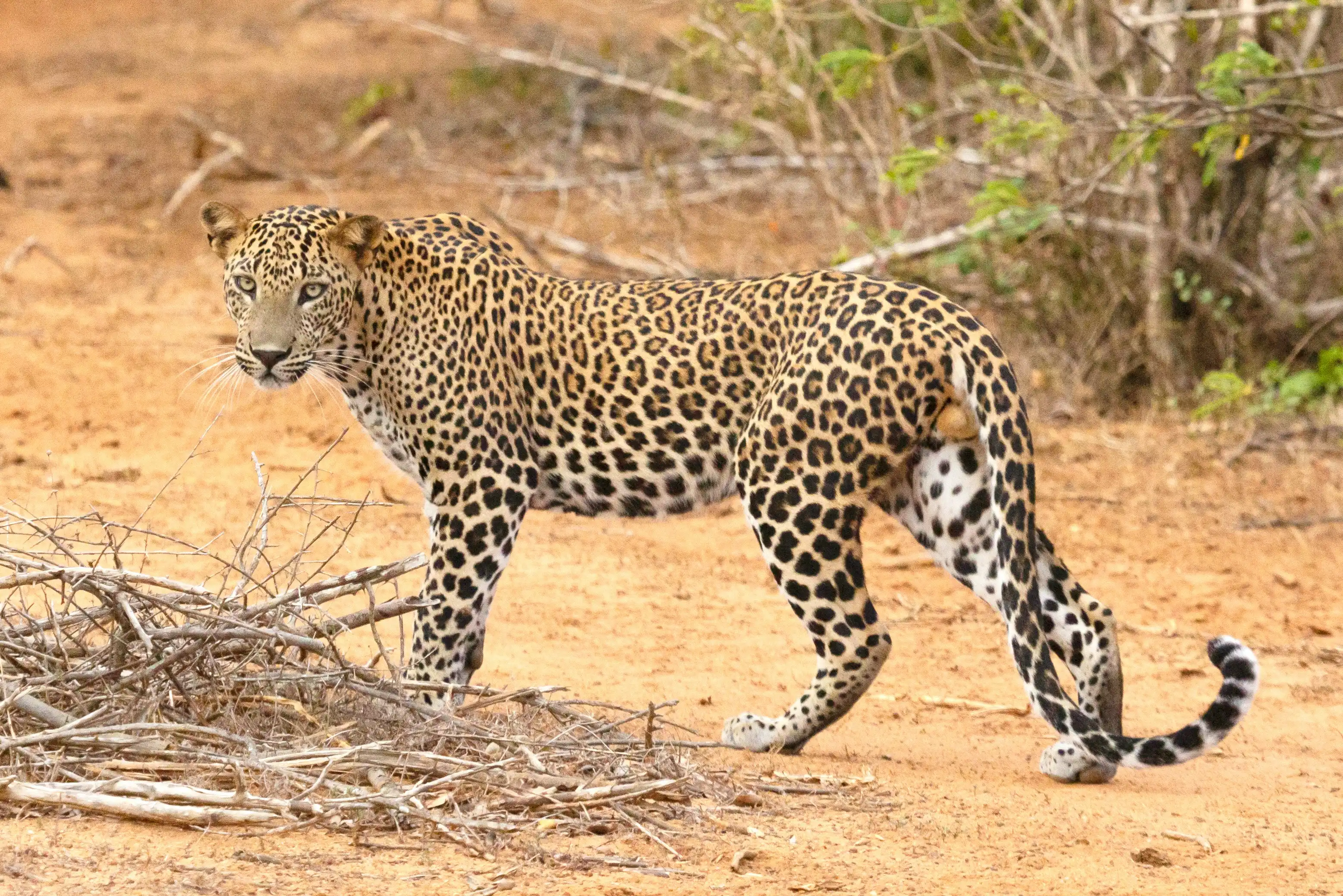

Yala National Park covers 979 square kilometres of dry scrub forest, lagoons, and rocky outcrops in southern Sri Lanka. It's home to elephants, sloth bears, crocodiles, and hundreds of bird species - but it's the Sri Lankan leopard that draws wildlife enthusiasts from around the world.
In this article
Best time to visit Yala
The best time to visit Yala is from February to July, when the dry season concentrates wildlife around the remaining water sources. June and July are peak months for leopard sightings - the vegetation is sparse and the animals are forced into the open to drink.
The park closes annually from September to mid-October for the monsoon season. During the wet season (October to January), the park is open but sightings are less reliable as the animals disperse across a larger area with abundant water.
Which zone to choose
Yala is divided into five blocks. Block 1 is the most visited and has the highest concentration of leopards - it's the best choice for first-time visitors. Block 2 is less crowded and offers a more exclusive experience, though leopard sightings are less frequent.
Blocks 3, 4, and 5 are rarely visited and require special permits. They offer a genuinely wild experience but are best suited to serious wildlife enthusiasts with multiple days to spend in the park.
Tips for spotting leopards
Leopards are most active in the early morning (6:00–9:00 AM) and late afternoon (4:00–6:00 PM). Book the earliest possible entry slot - the gates open at 6:00 AM and the first hour is when most sightings occur. An experienced tracker-guide is essential; they know the individual animals and their territories.
When a leopard is spotted, resist the urge to shout or make sudden movements. Stay in the jeep, keep voices low, and let your guide position the vehicle for the best view. Leopards in Yala are habituated to vehicles and will often ignore them completely if you remain calm.
Other wildlife to look for
Yala has one of the highest elephant densities in Asia - herds of 20 or more are common near the lagoons in the dry season. Sloth bears are shy but regularly seen near rocky outcrops, especially in the early morning. The park is also home to sambar deer, spotted deer, wild boar, and the rare fishing cat.
Birdwatchers will find Yala exceptional - over 215 species have been recorded, including the Sri Lanka junglefowl (the national bird), painted storks, black-necked storks, and the endemic Sri Lanka grey hornbill. The lagoons attract flamingos and pelicans during the migrating season.
What to bring on safari
Wear neutral colours (khaki, olive, beige) - bright colours disturb the animals and make you more visible. A wide-brimmed hat and high-SPF sunscreen are essential; the open jeeps offer no shade. Bring more water than you think you'll need - the heat in Yala can be intense.
A good pair of binoculars (8x42 or 10x42) will transform your safari experience. A telephoto lens (at least 300mm) is recommended for photography. Most importantly, bring patience - wildlife watching is never guaranteed, and the magic of Yala lies as much in the landscape and atmosphere as in any single sighting.
Enjoyed this article? Explore more Sri Lanka travel guides.
Back to Blog